
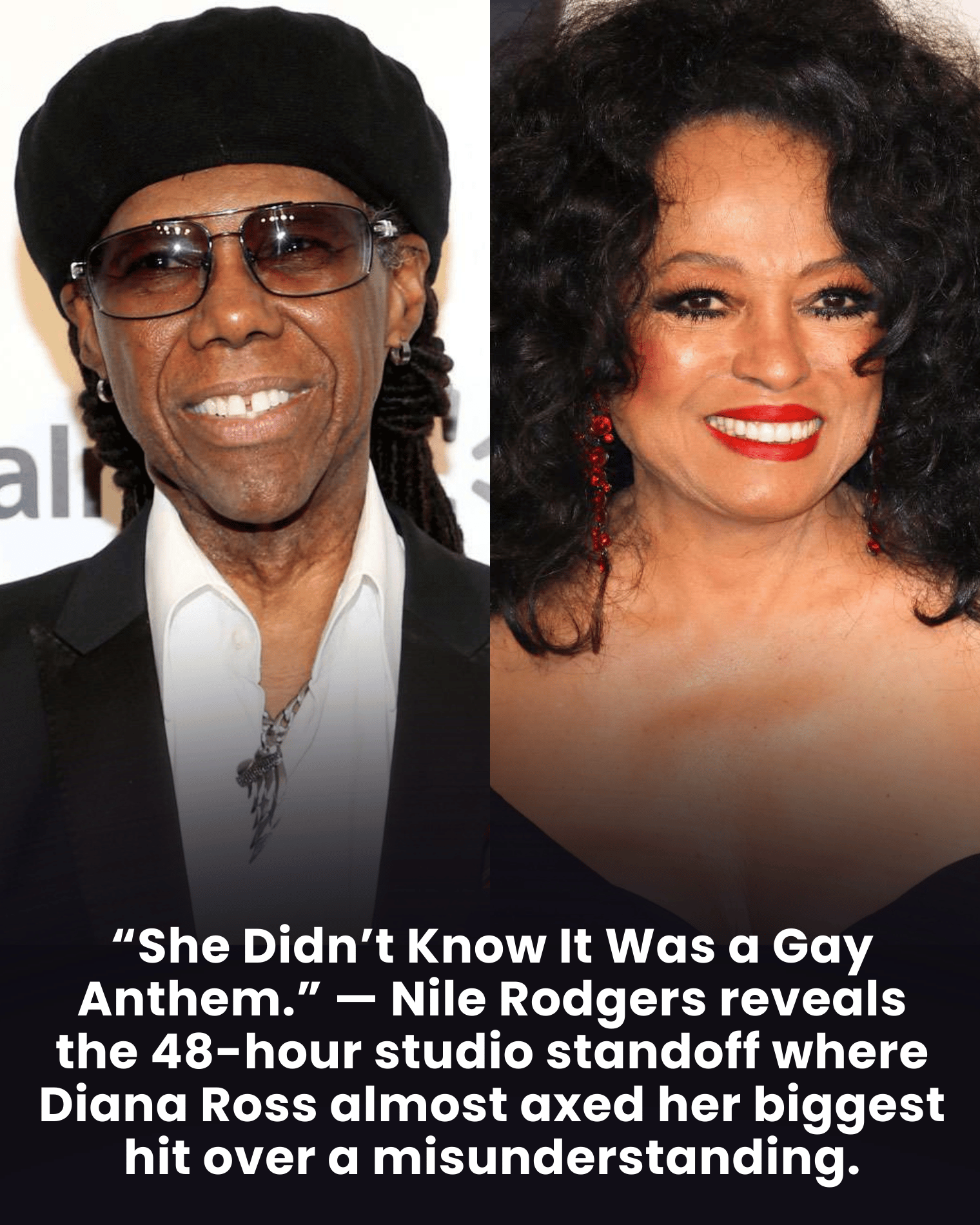
In the summer of 1980, the atmosphere inside the studio was anything but celebratory. Nile Rodgers had just presented a new track to Diana Ross for her upcoming album Diana — a bold, rhythmic declaration titled "I'm Coming Out." What happened next nearly erased one of the most iconic songs in pop history.
Rodgers, fresh off redefining disco and pop production with Chic, envisioned the song as a triumphant reintroduction. Ross was stepping into a new era, moving beyond the tightly controlled structure of her Motown years. To Rodgers, "I'm Coming Out" was a musical emancipation — a glittering announcement that she was claiming ownership of her image and sound.
But shortly after hearing early buzz about the track, Ross received a warning that shook her confidence. A DJ reportedly told her the phrase "coming out" was widely associated with members of the LGBTQ+ community publicly declaring their identity. In 1980, that association carried real industry risk, particularly for a global superstar navigating conservative media landscapes.
Panicked, Ross rushed back to the studio in tears.
According to Rodgers, she confronted him directly, accusing him of setting her up to fail. She feared the song would be interpreted as something far beyond her intention — potentially alienating parts of her audience or damaging her career. What Rodgers had viewed as celebratory suddenly felt, to her, like sabotage.
The next 48 hours became a quiet standoff.
Rodgers stood firm. He explained that while he was aware of the phrase's resonance within LGBTQ+ communities — and indeed inspired by the vibrant drag scene he had observed in New York clubs — his framing for Ross was rooted in independence. She was "coming out" from under Motown's shadow. Coming out as her own woman. Coming out into a new chapter of creative control.
The distinction mattered.
Rodgers reportedly reframed the song not as a coded message, but as a universal declaration of freedom. He urged Ross to see it as empowerment, not entrapment. The infectious horn line, the buoyant groove — they were built to feel triumphant, not controversial.
Eventually, Ross agreed to record it.
When "I'm Coming Out" was released, it exploded into cultural consciousness. It became both: a personal anthem for Ross's artistic autonomy and an enduring rallying cry for the LGBTQ+ community. Over time, its dual meaning strengthened rather than weakened its legacy.
The irony is profound. The very interpretation that once frightened Ross became part of the song's enduring power. It transcended its original context, evolving into a soundtrack for liberation in multiple forms.
Looking back, Rodgers has described the moment as a lesson in communication and courage. Had he backed down during those tense hours, pop history would look very different. Instead, a misunderstanding became a catalyst.
Today, "I'm Coming Out" stands as one of Diana Ross's signature songs — vibrant, fearless, and timeless. What began as a tearful confrontation in a studio ultimately transformed into a celebration of identity, independence, and self-expression.
And all because one producer refused to let a misunderstanding silence a masterpiece.